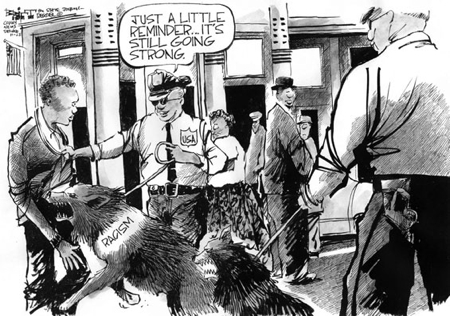
1. As you view the film Stuart Hall: Race, the Floating Signifier, choose two quotes by Hall that you found either compelling or contentious.
Unfortunately, due to technical difficulties, the class was unable to view this film, therefore, this question cannot be answered.
2. Choose one exercise, assignment of piece of advice offered in Chapter 8 of Fox's book, When Race Breaks Out.
The exercise I chose is entitled All Our Ethnicities. The exercise contains small groups of students who share their ethnic and family backgrounds, some influences that have shaped who they are, and/or their concept of "home". Bringing them into the classroom, a few would discuss the most interesting things they learned. This would allow the students to learn about the backgrounds that they and other students have and bring the different ethnicities together.
I think that this exercise is a good idea to try in a class that has multicultural students. Through discussions and questions, children would be able to learn about the other culture or religion, opening up the two worlds and sharing stories and facts about the other child. This would 'break the ice', as one might say, to the history and culture of the other student, possibly enabling the students to bond.
However, I think that this is a little bland, as the activity allows only a few students to gain the opportunity to share their history. True, the students start in smaller groups, but those that were not in the same group as the students not speaking do not get to learn about that culture. In order to make this a little more opened, perhaps the teacher could get one student from each of the small groups to share what they learned of each student in the group. This would allow everyone in the class to learn the cultures of the classroom.
3. After reading the Forward, Introduction and Chapter One of The Great White North?, choose two questions posed at the end of Chapter One and respond to them on your blog.
a) In what ways did/has Whiteness entered your life in Canada as either privilege and/or oppression?
Well, my Whiteness, when I was a child, was always pointed out to me, as I was raised in the Bahamas, however, once returning to Canada, I found that it was not so obvious. Upon living in Canada I am much more privileged than I was in the Bahamas. With more money than we had in Nassau, my family is able to afford a house, rather than rent, have 2 cars rather than a broken down one, and we have computers, televisions and phones. It is obvious to me, rather than the younger children of my family, that we are more privileged as White people in Canada than in the Bahamas.
b) In what ways can you and your students/clients/family work to articulate and transform the authority of Whiteness at the individual, societal, community, and institutional levels of the local and national levels of Canada?
Unfortunately, this is a very hard question to answer as the idea of Whiteness is seen everywhere in a society such as Canada, after all, the majority of the people in Canada are White. However, when authority is in question, one must always keep in mind the aspect of another's culture or heritage. These may alter the ways that people of another culture may be affected by our White authority. In schools or offices, the principal or manager must be aware of the different cultures he has below him and take them into account when the time for discipline in needed. Teachers and assistants would also do well to know what cultures they have in their class and address the rules and authority in way that all the students would understand. Slowly, the schools and offices will begin to transform themselves into a multicultural place of authority, not just one of Whiteness.
Sunday, September 30, 2007


Thursday, September 13, 2007
Tatum! Chapters 2 and 3. Question and Response
Chapter 2)
Comment: Based upon the quote on page twenty-six. In this section of her book, Tatum describes the stereotypical assessments that one makes when describing a certain race. For example, hair thickness, nose size, shape of eyes. She mentions that, due to these constant negative (or in some cases positive) view of certain aspects of one's appearance, many people are wishing to change, or have changed, that certain trait.
I find that so many of these people have this negative feeling about themselves because of the influence of the media, as well as social comments. The media is one of the worst forms of criticism there is. They are constantly portraying the ideal person, or the ideal race, or the highly stereotypic aspects of a race, portraying the way things ‘should be’. However, despite this fact, there are people fighting to oppose this ‘ideal’ view that the media has on someone, and yet, there are people, groups of people, aiding with this stereotypic view. How can a fat person over come his or her negative views if people around them continue to criticize. How can a black person overcome the racial slurs of black people of influence, such as rappers and actors, continue to act to these stereotypic traits?
Question: How can one over come the media’s portrayal of what race is?
Chapter 3)
Comment: Posted below is a similar topic as to this next question.
After reading chapter 3 of her book, I found that a reoccuring topic or idea is the idea of how to address the ideas and concepts of race when a child asks a question. Many of us think that addressing race with comments such as "They don't match." "Why is her face dirty?" is a negative thing and should not be commented. However, children, especially young children do not see how bad or inappropriate the question might be. So instead of simply saying "shh" to the child, how would one address this?
I myself grew up in the Bahamas, so I knew that there was a cultural difference, a skin difference, than my black schoolmates, but I never had to deal with racism. I was accepted with awe and open arms. Of course, I had comments, such as "Your skin is like a china doll." Or "are all canadians blonde with blue eyes?" But these were answered by the teachers and parents around me. I myself do not remember asking anyone about those differences.
Question: How would one discuss the issues of race and racism to a child if, as a child himself, he was not talked to?
Comment: Based upon the quote on page twenty-six. In this section of her book, Tatum describes the stereotypical assessments that one makes when describing a certain race. For example, hair thickness, nose size, shape of eyes. She mentions that, due to these constant negative (or in some cases positive) view of certain aspects of one's appearance, many people are wishing to change, or have changed, that certain trait.
I find that so many of these people have this negative feeling about themselves because of the influence of the media, as well as social comments. The media is one of the worst forms of criticism there is. They are constantly portraying the ideal person, or the ideal race, or the highly stereotypic aspects of a race, portraying the way things ‘should be’. However, despite this fact, there are people fighting to oppose this ‘ideal’ view that the media has on someone, and yet, there are people, groups of people, aiding with this stereotypic view. How can a fat person over come his or her negative views if people around them continue to criticize. How can a black person overcome the racial slurs of black people of influence, such as rappers and actors, continue to act to these stereotypic traits?
Question: How can one over come the media’s portrayal of what race is?
Chapter 3)
Comment: Posted below is a similar topic as to this next question.
After reading chapter 3 of her book, I found that a reoccuring topic or idea is the idea of how to address the ideas and concepts of race when a child asks a question. Many of us think that addressing race with comments such as "They don't match." "Why is her face dirty?" is a negative thing and should not be commented. However, children, especially young children do not see how bad or inappropriate the question might be. So instead of simply saying "shh" to the child, how would one address this?
I myself grew up in the Bahamas, so I knew that there was a cultural difference, a skin difference, than my black schoolmates, but I never had to deal with racism. I was accepted with awe and open arms. Of course, I had comments, such as "Your skin is like a china doll." Or "are all canadians blonde with blue eyes?" But these were answered by the teachers and parents around me. I myself do not remember asking anyone about those differences.
Question: How would one discuss the issues of race and racism to a child if, as a child himself, he was not talked to?
Wednesday, September 12, 2007
Black Or White can Heal the World
After reading some of the videos posted on youtube, I remembered that alot of song writers and singers have approached the idea of Race and Racism. They attempt to put it into a positive perspective or give us their own feelings on the idea of Racism. Michael Jackson, despite the controversy of his own race, has created a few videos on the concept of race and racism. For Example: his videos, Black Or White, and Heal the World. Both of these video address his views on race and contain imagery of different races and different anti-____ groups, such as the KKK.
I find that alot of people, if they simply listen to some of the lyrics of Michael's, and so many other's, songs, can benefit from the different perceptives of Racism.
" See, It's Not About Races
Just Places
Faces
Where Your Blood
Comes From
Is Where Your Space Is
I've Seen The Bright
Get Duller
I'm Not Going To SpendMy Life Being A Color"
I find that alot of people, if they simply listen to some of the lyrics of Michael's, and so many other's, songs, can benefit from the different perceptives of Racism.
" See, It's Not About Races
Just Places
Faces
Where Your Blood
Comes From
Is Where Your Space Is
I've Seen The Bright
Get Duller
I'm Not Going To SpendMy Life Being A Color"
http://youtube.com/watch?v=-eGapuYUTOo --black or white
http://youtube.com/watch?v=2boee8XEHA0 --- heal the world
Tuesday, September 11, 2007
Are we all able to talk?
After reading this assignment for my multicultural class, I noticed that one key concept is that when dealing with racism and other isms, one way to educate the kids, both your own children and the students that one may be instructing in the future, is through talking. The only thing is, what if one does not know how to address theses questions? I myself grew up in the Bahamas, so I knew that there was a cultural difference, a skin difference, than my black schoolmates, but I never had to deal with racism. I was accepted with awe and open arms. Of course, I had comments, such as "Your skin is like a china doll." Or "are all canadians blonde with blue eyes?" But these were answered by the teachers and parents around me. I myself do not remember asking anyone about those differences.
I was never educated on the aspects of race, as I felt no difference in the race between someone of Black or White coloured skin. However, my brother is 4 and will be starting school soon. How will I, as an older sister, as an educator, help him understand? I feel it is too complex to tell him about melanin and the biological differences, but I do not want to simply say. "Well, he is different." How would one obtain the capabilities to answer the child's simple and yet, so complex questions about Race?
I was never educated on the aspects of race, as I felt no difference in the race between someone of Black or White coloured skin. However, my brother is 4 and will be starting school soon. How will I, as an older sister, as an educator, help him understand? I feel it is too complex to tell him about melanin and the biological differences, but I do not want to simply say. "Well, he is different." How would one obtain the capabilities to answer the child's simple and yet, so complex questions about Race?
What does it mean to have a cultural identity? 09/10/07
Cultural Identity is such a hard definition for someone to answer as it covers such a broad aspect of what the two words mean. When defining culture, the Oregon State Educational website http://oregonstate.edu/instruct/anth370/gloss.html states that culture is "The learned patterns of behavior and thought that help a group adapt to it's surroundings." In general it is what we have grown to understand and accept as the norm to where we live.
Now, Identity is used to describe something according to similar aspect and attributes. It is what makes us the same in certain respects or different in others. Cultural Identity then, accoding to these definitions must be the collective identity in the behavioural patterns of a society, or groups of persons.
Cultural identity is not, however based solely upon rules and regulation of law. These cultural identities are also seen in medical practises, governments, politics and other such aspects of a society. Below is the link to a youtube video that shows the understanding of cultural identity when dealing with medical practises by Culturally Competent Care. Cultural differences should not affect everyday life, political standings, rights and justice or medical care.
http://youtube.com/watch?v=XF8yZRgcSkg
Now, Identity is used to describe something according to similar aspect and attributes. It is what makes us the same in certain respects or different in others. Cultural Identity then, accoding to these definitions must be the collective identity in the behavioural patterns of a society, or groups of persons.
Cultural identity is not, however based solely upon rules and regulation of law. These cultural identities are also seen in medical practises, governments, politics and other such aspects of a society. Below is the link to a youtube video that shows the understanding of cultural identity when dealing with medical practises by Culturally Competent Care. Cultural differences should not affect everyday life, political standings, rights and justice or medical care.
http://youtube.com/watch?v=XF8yZRgcSkg
Subscribe to:
Posts (Atom)